
Last Christmas
Overview
Julia Williams’s Last Christmas is a contemporary romantic and family novel with the shape of a seasonal ensemble story. It was first published in 2009 and is identified as the opening book in Williams’s Christmas series, which later includes A Merry Little Christmas (2012) and Coming Home for Christmas (2014). The novel uses Christmas as an emotional frame, but its concerns extend well beyond holiday cheer: heartbreak, marriage, parenting, work, community, and the difficult business of beginning again. Its principal settings are London and a fictional village in the Shropshire countryside.
In London, Catherine “Cat” Tinsall has become known online as the “Happy Homemaker,” a polished image that contrasts sharply with her private life. Her marriage is in trouble, her four children make the household exhausting, and her mother’s increasing forgetfulness adds another family responsibility. Cat’s husband, Noel, is an engineer who fears losing his job as recession and difficulties in the building industry put work under pressure. The couple’s problems are not identical, but their limited communication makes it harder for either to understand what the other is carrying. Noel’s chance encounter with the village of Hope Christmas offers a possible second chance. The village itself faces a threat from developers, giving him a practical cause to take up as well as a possible route towards a changed life.
The countryside strand follows Marianne Moore, a teacher new to the village, and Gabriel, a local farmer raising a young son alone after his wife, Eve, left. Marianne is trying to recover from a painful relationship; memories of what she has lost make the season’s emphasis on family especially difficult. Gabriel, meanwhile, must combine the daily work of farming with the demands of caring for his child. Their stories run alongside Cat and Noel’s, bringing together characters whose problems range from romantic disappointment to the strain of sustaining a household and a community. The novel’s account reaches across the course of a year, so Christmas is a point of reference rather than the whole of the action. Available summaries establish these situations but do not warrant spelling out every turn or the ending.
Themes and form
A central theme is the gap between the life people present and the life they actually lead. Cat’s online persona promises domestic happiness, while her real household is marked by fatigue, marital distance, and care responsibilities. Noel’s anxiety about employment complicates the same marriage from another direction: keeping worries private does not protect a relationship from them. Marianne and Gabriel extend the book’s interest in loss beyond a single romantic pairing. Both must continue with work and family obligations while trying to make room for emotional recovery. The novel consequently treats love not simply as attraction, but as a matter of communication, patience, and responsibility.
Christmas supplies both hope and contrast. The season carries familiar expectations of reunion and warmth, yet it can also intensify awareness of separation and unresolved grief. The threatened village broadens the story from private relationships to the fate of a community and its way of life. By moving between London and rural Shropshire, Williams places urban family and employment pressures beside the vulnerabilities of farming and village life. The multiple-character structure allows the book to consider how personal decisions are shaped by different households and surroundings, rather than concentrating exclusively on one couple.
Background and standing
Detailed evidence about Williams’s drafting process or the circumstances in which she conceived the book is not available in the retrieved material. She has, however, described Hope Christmas as a fictional village loosely based on Church Stretton in Shropshire. That geographical reference gives the rural strand a specific regional grounding, while the London setting keeps the novel connected to contemporary family and work concerns. Its publication history places it at the start of a continuing series of Christmas-themed novels.
The book’s lasting status is best understood as that of a seasonal popular novel and the first entry in Williams’s Christmas series, rather than as a work with an established claim to canonical status. Readers and reviewers have responded differently to its balance of domestic realism and festive atmosphere. Some appreciate the interconnected characters and the attention to ordinary pressures; one review notes that a story spanning a year may feel less consistently Christmassy than expected. That tension is part of the book’s character: its interest lies less in holiday spectacle than in the work of rebuilding relationships, facing practical problems, and finding the possibility of renewal amid imperfect lives.
About the Author
Early life and education
Julia Williams grew up in North London as one of eight children in what her publisher describes as a bookish family. Her twin sister also writes, and other sisters work as a translator and a poet. Williams has said that she was always making up stories in her head, though she once assumed that everyone did the same. She studied English at the University of Liverpool, where she met her future husband, Dave, a dentist. They married in 1989 and have four daughters. Williams lives with her husband in Surrey. The available biographical material does not give her birth date, so a year or age cannot be established from it.
Publishing career and fiction
After university, Williams began a career in publishing and spent ten years working in children’s books. Following the birth of her second child, she went freelance and decided to try writing fiction, acting on a long-standing wish rather than continuing to put it off. Her transition from publishing professional to novelist grew out of both her familiarity with books and a change in her family and working life.
Her first novel, Pastures New, was published by Avon in 2007. Williams has since published ten books, according to her agent’s biography. Among the works for which the retrieved material supplies publication years are Last Christmas (2009), A Merry Little Christmas (2012), and Coming Home for Christmas (2014), which belong to her Christmas-themed series. She has also written Strictly Love and Midsummer Magic. In an interview, she described Midsummer Magic as a lighter romantic comedy, using A Midsummer Night’s Dream as a frame for a story involving wedding preparations, old romantic history, and a hypnotic experiment. Publication dates for Strictly Love and Midsummer Magic are not established by the supplied evidence and are therefore not specified here.
Style and reputation
Williams’s fiction is associated with accessible contemporary romance, family relationships, and humour. Her characters’ romantic lives are closely connected to ordinary pressures: marriage, children, work, and obligations to other family members. Last Christmas, for example, interweaves a London household in difficulty with the lives of people in a Shropshire village. Midsummer Magic demonstrates a lighter approach, drawing on a familiar Shakespearean comedy as a structure for romantic misunderstandings and comic disorder. Her books are presented by her publisher as warm and humorous popular fiction.
Her reputation rests on a sustained career in commercial fiction and a substantial readership. HarperCollins reports that her books have sold more than half a million copies and describes ten of them as bestsellers. Those figures indicate broad popular reach, though they do not establish that every book received the same response. Reviews of Last Christmas, for instance, differ over how strongly its year-long story sustains a festive atmosphere. Williams’s continuing publication record and her combination of romance, family life, and light comedy are central to her standing as a popular British novelist. No death is reported in the available biographical sources; her publisher and agent present her as a living author with further projects in development.
StoryFlow
The Wounded General and the Healer
This flow follows Malphas from a battlefield choice that leaves him wounded to the unexpected trust that begins to remake his life.
A Home Made by Choice
This flow traces Malphas's movement from a life defined by command and destruction toward chosen domestic belonging.
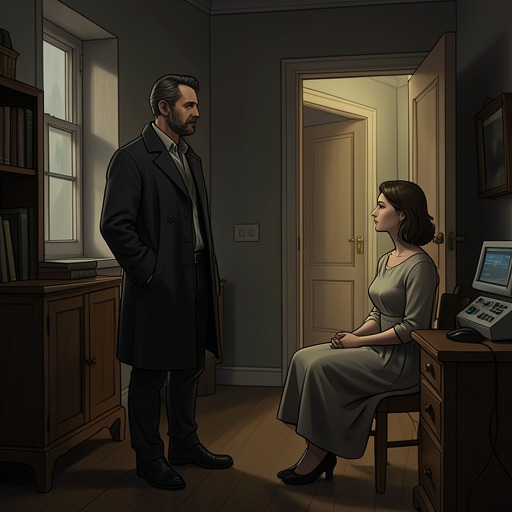
From Defender to Defector
This flow follows Malphas as private love makes him choose human safety over the demon forces he once commanded.
